
VIP protection companies in South Africa — a corporate buyer's guide (2026)
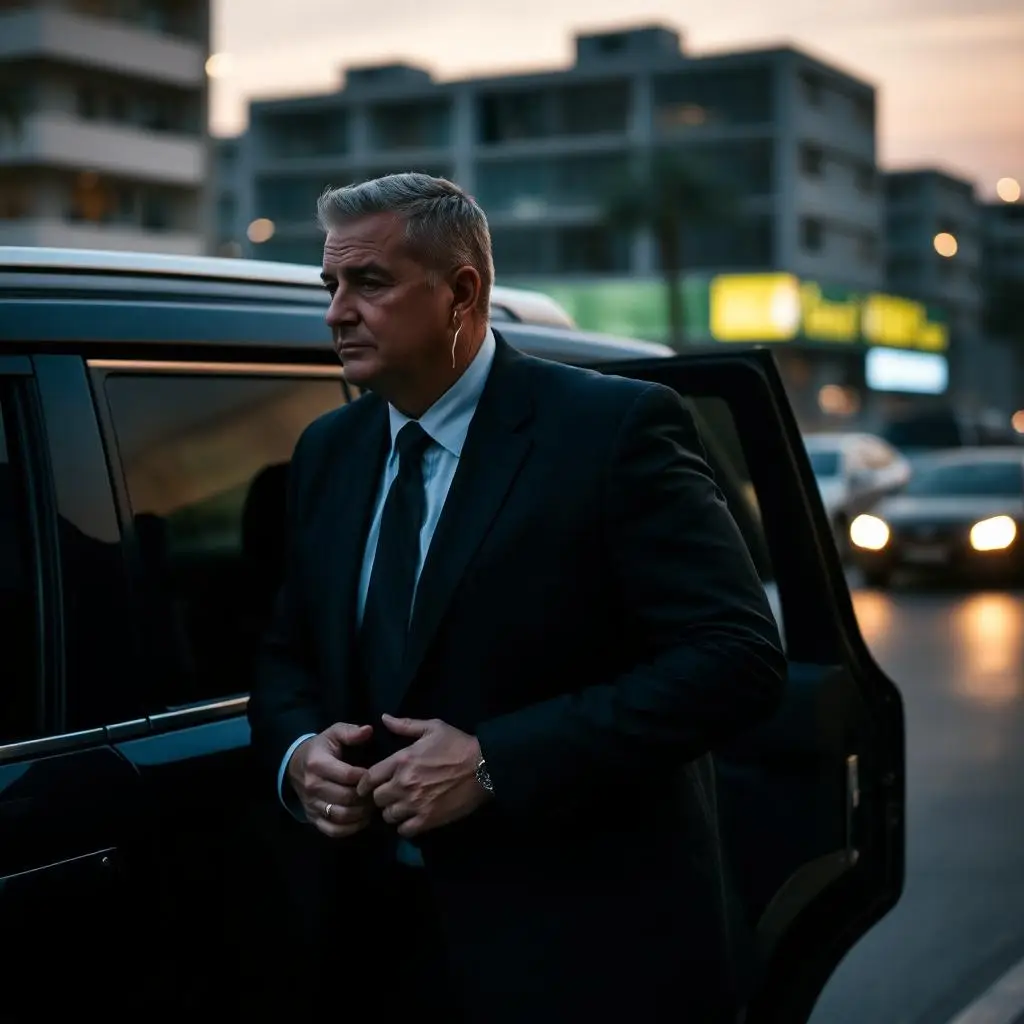
VIP protection in South Africa is not a rebranded bodyguard service. For directors, principals, high-net-worth families, visiting executives and public figures, the right team is a discreet operational unit — trained in close protection, defensive driving, medical response and threat assessment — that keeps you moving safely without ever making you look like a target.
This buyer's guide is written for corporate procurement, family offices and CEOs evaluating VIP protection companies in South Africa in 2026. It covers what to check, what to ignore, and what a serious operator should be able to prove on paper before you sign.
1. Close protection is not armed guarding
An armed guard secures a static post. A close protection officer (CPO) secures a moving principal — you, your family, or your visiting executive. The training, mindset and equipment are different. Ask directly whether officers hold recognised close protection qualifications in addition to their PSIRA grading, and how recently they revalidated.
A CPO's day is 80% planning and 20% action: advance recces, route selection, venue liaison, medical planning, comms discipline. If the sales pitch is only about firearms, walk away.
2. PSIRA, SAPS and firearm compliance
Every VIP protection company operating in South Africa must be PSIRA-registered, and every CPO on your detail must be individually graded and firearm-competent under the Firearms Control Act. Ask for the company's PSIRA number and each deployed officer's PSIRA and SAPS competency certificates. Verify them yourself on the PSIRA register.
Warhawk Security is PSIRA-registered under 4788568 and SAPS 26359, with full CIPC, CSD, PSSPF and NBCPSS documentation supplied on request.
3. Risk profiling before deployment
A credible VIP protection company will not quote you a per-hour rate blind. Expect a confidential risk assessment first: who the principal is, public profile, business sector, family exposure, travel patterns, residence, event calendar and existing threat history. The output is a risk profile that drives team size, vehicle configuration, medical loadout and comms plan.
If a provider skips the risk profile and jumps straight to a monthly retainer, you're buying uniforms — not protection.
4. Vehicles, driving and route planning
For most principals in South Africa, the vehicle is the highest-risk environment. Ask whether protection drivers are separately trained in defensive and evasive driving, whether vehicles are mechanically inspected before every detail, and how routes are planned (primary, alternate and emergency, with hospital pins).
For higher-risk profiles, ask about armoured vehicle options and follow-car doctrine. For lower-risk corporate details, a single professionally driven executive vehicle with a competent CPO is usually more discreet and more effective than a convoy.
5. Medical capability
Every CPO on your detail should be a current first-aid responder at minimum, with tourniquet, chest seal and trauma kit carried on person — not left in the vehicle. For senior principals, ask whether the company can deploy an advanced life-support (ALS) medic on higher-risk movements and how they liaise with your preferred private hospital group.
6. Discretion and profile management
The best VIP protection in South Africa is the kind nobody notices. Ask how officers dress for corporate environments, how they handle hotel and restaurant check-ins, and how they behave in front of clients, staff and family. Loud earpieces, tactical vests in a boardroom, and social-media posts referencing the principal are all disqualifying.
A professional detail integrates into your day. Your staff should read them as the executive's driver and PA — not a security team.
7. Contract terms, insurance and confidentiality
Look for written non-disclosure clauses covering the principal, family and business, current public liability and professional indemnity cover appropriate to VIP work, a clear escalation and termination clause, and transparent pricing for standard details, ad-hoc movements, travel days and overnight cover.
Ask for a compliance pack up front: PSIRA, CIPC, CSD, PSSPF, NBCPSS levies, POPIA policy and public liability certificate. A serious VIP protection company keeps this pack current and emails it the same day.
8. Reporting and after-action
For retained clients, expect a monthly report: movements covered, incidents logged, near-misses, route changes, medical events, and recommendations. For one-off events, expect an after-action report within 48 hours. If a provider cannot produce a template, they are not tracking your risk.
9. Red flags
Providers who name-drop celebrity clients in the sales meeting. Officers who post firearms or principals on social media. Uniforms and tactical gear where a suit is appropriate. Vehicles with no visible mechanical inspection log. Firearms without valid SAPS competency and section-16 licences. Blanket per-hour pricing with no risk assessment. Any of these on their own is a reason to keep looking.
Warhawk VIP protection
Warhawk provides PSIRA-graded close protection nationally, coordinated from our Gqeberha operations base. Every deployment starts with a confidential risk profile and a written operations order, and every officer on your detail is CPO-qualified, medically current and firearm-competent under SAPS.
For a confidential VIP protection consultation, contact admin@warhawk.co.za or 068 636 6493.