
PSIRA compliance checklist for corporate buyers (2026)
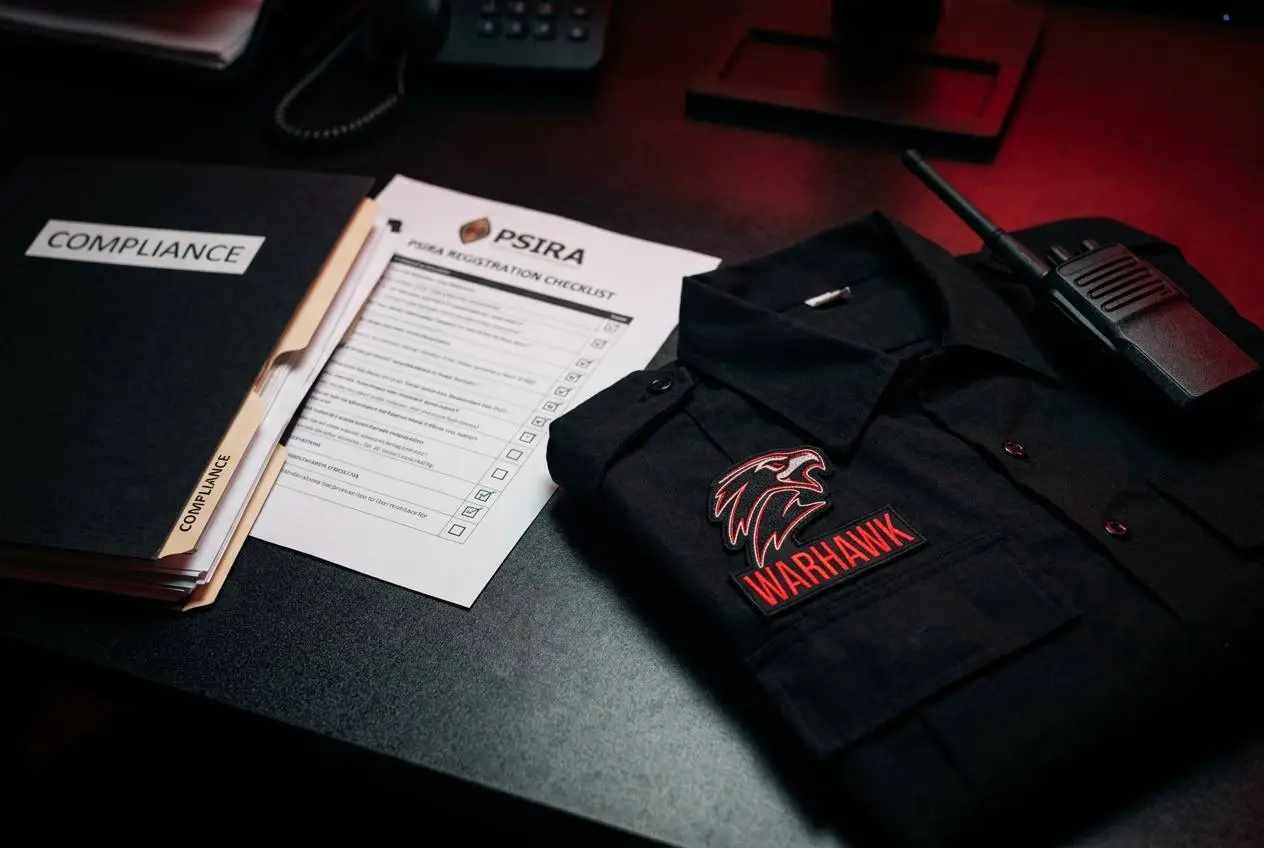
PSIRA compliance is the floor, not the ceiling. But most corporate buyers still accept a single certificate PDF and move on. Below is the full document set a compliant South African security provider should hand over on request — with what each document proves and how to verify it in under five minutes.
1. PSIRA business registration certificate
Every provider must hold a valid PSIRA business certificate. Ask for the certificate and the PSIRA number, then verify the status directly on the PSIRA public register. Look for "active" status and a registration date consistent with the company's trading history. A suspended or lapsed registration means every officer on your site is operating illegally — and your contract is unenforceable.
2. Individual officer PSIRA numbers and grades
Every officer deployed must be individually PSIRA-registered and graded appropriately for the post (see our PSIRA grades explainer). Demand a deployment list showing each officer's PSIRA number and grade before mobilisation, and again quarterly. Spot-check three numbers on the PSIRA register. A provider that hesitates is telling you something.
3. CIPC company registration
The bidding entity must be a registered South African company in good standing at CIPC. Request the CoR14.3 (registration certificate) and confirm the company status is "in business" on the CIPC portal. A company in deregistration process cannot legally hold your contract.
4. NBCPSS levy and wage compliance
The National Bargaining Council for the Private Security Sector sets minimum wages and levies for the industry. Request the provider's latest NBCPSS levy payment confirmation. A provider paying below the gazetted wage is exposing you to reputational and, increasingly, legal risk — under-payment claims can attach to the client under joint-and-several liability principles.
5. WCA letter of good standing
The Compensation for Occupational Injuries and Diseases Act requires an annual letter of good standing from the Compensation Commissioner. Without it, an officer injured on your premises can turn into a direct claim against you. Ask for a letter dated within the last 12 months.
6. PSSPF provident fund contributions
The Private Security Sector Provident Fund is mandatory. Request a recent contribution confirmation. Non-payment usually correlates with wider financial distress at the provider — the kind that ends in your officers walking off site on payday.
7. CSD registration (for public-sector spend)
If any part of the contract touches a public entity, the provider must be active on the Central Supplier Database with a valid tax clearance status and BBBEE certificate loaded. Verify the CSD reference number and status before award.
8. Firearm competency and licences (armed contracts)
For any armed post, request the provider's firearm licence register and evidence of individual officer competency certificates under the Firearms Control Act. Every firearm on your site must be lawfully licensed to the provider and used by a competency-holding officer. There is no grey area here.
9. Insurance certificates
Request current public liability, professional indemnity and asset-in-transit (if applicable) certificates, with cover levels appropriate to your site value. A R1m public liability cover is inadequate for a corporate campus — specify your minimum in the RFP.
10. POPIA readiness
Guarding operations process personal information at every visitor gate and every CCTV recording. Ask for the provider's POPIA policy, their information officer contact and a description of how visitor and CCTV data is stored, retained and destroyed. Paper visitor books almost never comply.
Warhawk compliance pack
We keep every document above current and ready to send. Request our compliance pack at admin@warhawk.co.za and we will supply the full set with expiry dates listed, so you can drop it straight into your vendor file.